François-Xavier Roth conducts Strauss, Berlioz and Boulanger
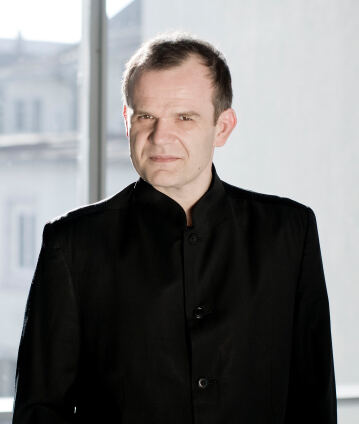
When 19-year-old Lili Boulanger became the first woman to win the prestigious Prix de Rome with Faust et Hélène in 1913, it was a sensation. The poetic, sensual and richly coloured cantata tells the story of Faust, who sells his soul to meet the beautiful Helen of Troy. In his Symphonie dramatique Roméo et Juliette, Hector Berlioz wrote his musical setting of what is perhaps the greatest love story of all. Roth opens the programme with Richard Strauss’s haunting Metamorphosen.
The destruction of Germany’s great opera houses during the Second World War symbolised, for Richard Strauss – who was over 80 years old and whose relationship with National Socialism had been somewhat ambiguous – the end of a great cultural tradition. His Metamorphosen, composed during the final months of the war, is imbued with a correspondingly elegiac mood. The composer, who was renowned for his masterful art of orchestration, confined himself to the silky, warm sound of an intimate string ensemble. The work also takes on the character of a retrospective through a quotation from Beethoven’s Eroica Symphony.
Among Strauss’s role models was Hector Berlioz, who he described as a “brilliant colourist” and “the true creator of the modern orchestra”. His Roméo et Juliette shifts between symphony and musical drama and is regarded as one of the precursors to Strauss’s tone poems. In this setting of Shakespeare’s play, vocal parts are reserved only for minor characters, while “Roméo seul” – the title character’s solitary soliloquy – is conceived as a purely instrumental piece. The world of Mab, the legendary queen of the fairies, with its blend of subdued strings, shimmering flute tones and the sound of cymbals, is a prime example of Berlioz’s art of orchestration, which Strauss so admired.
The main work of the programme is Lili Boulanger’s Faust et Hélène. It tells the story of Faust’s encounter with the most beautiful woman of ancient Greece, as depicted by Goethe in the second part of his tragic verse drama. With this cantata, the composer – then just 19 years old – became the first woman ever to win the coveted Prix de Rome. Boulanger handles both the vocal parts and the instrumental sections with confidence and ingenuity – and creates striking atmospheric scenes and dramatic narrative arcs.
© 2027 Berlin Phil Media GmbH