Iván Fischer conducts Mahler’s Fifth Symphony
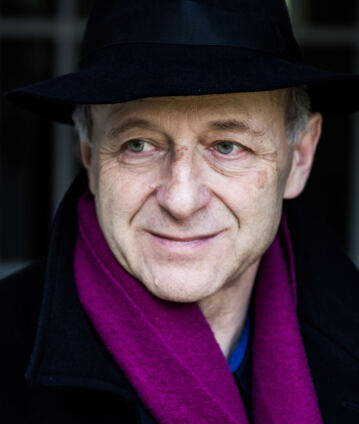
The Fifth is Gustav Mahler’s most popular symphony, largely because of its Adagietto, a musical declaration of love to Mahler’s future wife, Alma. The work takes the listener through contrasting emotional worlds, from grief and hope, to doubt and tenderness. The performance is conducted by Iván Fischer, one of the leading Mahler interpreters of our time. The programme opens with Joseph Haydn’s Sinfonia concertante: four soloists from the Berliner Philharmoniker engage in a virtuoso dialogue with the orchestra.
Finally free! That must have been what Joseph Haydn was thinking when, in 1790, following the death of Prince Esterházy, he was released from his gilded provincial cage. He had served as kapellmeister in Eisenstadt for some 30 years, but now the composer could at last set out to enjoy his Europe-wide fame. The first opportunity came in the form of an invitation from Johann Peter Salomon to perform in his concert series in London. Haydn’s success in England was phenomenal – and it was thanks to his time there that we have, amongst other works, the lively Sinfonia concertante, which he composed in just a few days. Haydn intended the violin part for Salomon; it stands out slightly from the other parts, particularly in the operatic recitative of the Andante.
“The Fifth is a cursed work,” Gustav Mahler grumbled, “nobody understands it.” He had previously provided audiences with written explanations of the poetic ideas behind his earlier symphonies, but from now on, his music was to be understood without words – no easy task when it was articulated in such a polyphonic manner as in the Fifth. This new compositional style did not come about by chance: Mahler had studied Bach’s The Art of Fugue extensively in 1901. It took an unusually long time for the music of the Fifth to take shape in Mahler’s mind, with ten years separating the first and the final version of this “cursed work”. Today it is one of his most popular symphonies.
The funeral march has a sombre air about it; its opening fanfare has a military feel and is also reminiscent of Beethoven’s “fate” motif. What is restrained in the marching rhythm of the first movement bursts forth in the second “with the greatest vehemence” and unbridled emotion. Mahler marked the passage where a wind chorale – which would later become a defining feature of the finale – is heard with two arrows and the word “climax”. He predicted his scherzo, the linchpin of the work, would face a “long history of suffering” due to a lack of understanding, as it “endlessly gives birth to a world anew, only for it to perish the very next moment”. Two horn calls – one bold, the other elegiac – mark the poles between which the waltz shifts, at times rendered almost unrecognisable by its “thorough reworking”. Only the heartfelt declaration of love in the adagietto remains entirely unbroken, as even the carnival-like, euphoric frenzy of the finale is interspersed with the shadows of the first movement.
© 2026 Berlin Phil Media GmbH