Philharmonische Kammermusik: Mozart contra Salieri
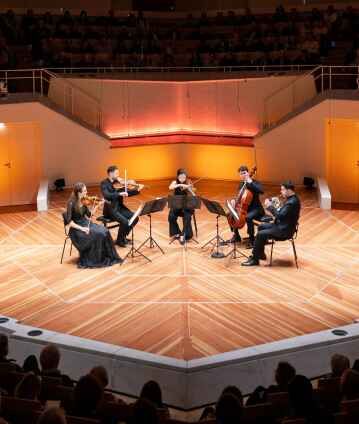
Antonio Salieri genießt in der Musikwelt keinen guten Ruf: Als neidischer Widersacher Mozarts soll er ihn – so eine Legende – sogar vergiftet haben. Auch Miloš Formans Film Amadeus zeigt Salieri als mittelmäßigen, intriganten Komponisten. Dabei war er zu Lebzeiten überaus erfolgreich. Aber ist sein Schaffen dem Mozarts ebenbürtig? Mitglieder der Berliner Philharmoniker stellen zwei Streichquartette von Salieri Werken Mozarts gegenüber, darunter das heitere Hornquintett.
Hätte es die Gerüchte um Salieris Schuld am Tod Mozarts nicht gegeben, wäre dem langjährigen Kapellmeister am Wiener Hof wohl ein respektabler Platz in der Musikgeschichte sicher gewesen. Salieri war nicht nur ein produktiver Komponist, sondern auch der Lehrer von Beethoven, Schubert und Liszt. Dass er die anspruchsvolle Technik des Kontrapunkts souverän beherrschte, zeigen die schwungvollen Scherzi »di stile fugato« in diesem Programm. Einen direkten Vergleich ermöglicht die Gegenüberstellung mit Mozarts Adagio und Fuge – beide Werke sind für Streichquartett geschrieben.
Mit seinen insgesamt sechs Streichquintetten begründete Mozart eine Tradition, die später unter anderem von Mendelssohn, Brahms und Bruckner fortgesetzt wurde. Mozart ergänzte die Streichquartett-Besetzung um eine zweite Bratsche – ein Instrument, das er selbst gern spielte. In einigen Privataufführungen der Quintette bildete Mozart mit Joseph Haydn das vermutlich prominenteste Bratschen-Duo der Geschichte. Das Werk in C-Dur – das durch hinreißende Dialoge zwischen Geige, Cello und Bratsche bezaubert – gehört harmonisch und formal zu den ausdrucksstärksten Beiträgen des Komponisten zur Kammermusik.
Die Qualität von Mozarts zahlreichen Werken für Bläser verdanken wir auch den Freundschaften des Komponisten mit ausgezeichneten Instrumentalisten. Für Joseph Leitgeb, den er als Kollegen seines Vaters im Salzburger Orchester kennengelernt hatte, schrieb Mozart sein einziges Hornquintett sowie vier Solokonzerte. Wie drei der Konzerte steht auch das Quintett in Es-Dur, da diese Tonart für das damals noch ventillose Horn besonders gut geeignet war und ihm ermöglichte, seinen warmen Klang in Kantilenen zu entfalten.
Mitglieder der Berliner Philharmoniker
Johanna Pichlmair
Rachel Schmidt
Tobias Reifland
Moritz Karl Huemer
László Gál
Kyoungmin Park
© 2026 Berlin Phil Media GmbH
Kategorie
Künstler*innen
Unsere Empfehlungen
- Philharmonische Kammermusik: Korngold, Rihm und Bruckner
- The Berlin Phil Series: Ein Abend in Wien
- Philharmonische Kammermusik: Von der Wiener Klassik in die Moderne
- Philharmonische Kammermusik: Traumsequenzen und Harlekinaden
- Philharmonische Kammermusik: Streichquartette von Schumann und Rihm
- The Berlin Phil Series: Vive la France!