2026 New Year’s Eve Concert with Kirill Petrenko and Alexander Malofeev
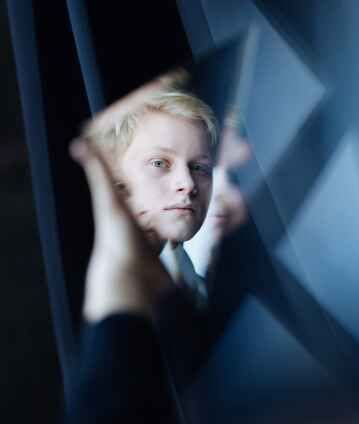
Kirill Petrenko and the Berliner Philharmoniker bid farewell to the year with a touch of humour: in his Concerto for Piano and Trumpet, Dmitri Shostakovich brilliantly satirises the genre. Alexander Malofeev makes his debut alongside principal trumpeter David Guerrier. Sergei Prokofiev, on the other hand, offers an ironic reflection on the First Viennese School in his Symphonie classique, while Richard Strauss portrays the prankster Till Eulenspiegel.
Classical music is stuck with the hard-to-shake idea that it's all about a certain earnestness. In Germany, the distinction between “E-Musik” (serious music) and “U-Musik” (light music) even led to different billing categories being applied by the performing rights organisations. It was not until 2026 that the decision was taken to abolish what was a controversial distinction. In this New Year’s Eve Concert, chief conductor Kirill Petrenko demonstrates just how entertaining, and indeed how funny the “serious” music performed by the Berliner Philharmoniker can be. The programme opens with the charming overture to Otto Nicolai’s “comical-fantastical” opera The Merry Wives of Windsor. Premiered in March 1849 at the Königliches Opernhaus in Berlin, this humorous stage work, which explores gender roles and the longing for love, became the composer’s greatest success.
Pianist Alexander Malofeev, aged 25, will be performing Dmitri Shostakovich’s Concerto for Piano, Trumpet and String Orchestra alongside orchestra member David Guerrier – the composer was around the same age when he sat at the piano for the world premiere in 1933. As if to make fun of the conservative, stuffy nature of classical concerts, the still carefree Shostakovich confidently contrasts Beethoven quotations with music-hall melodies in the composition, flirts with a theme by Haydn, before “incorrect” harmonies on the piano “interrupt” the trumpet solo. Listeners’ expectations are constantly undermined, and it seems as though someone had understood exactly how humour works – and formulated a few punchlines with great musical virtuosity.
Sergei Prokofiev was also 25 when, in 1917, he presented his Symphonie classique, a work “in the style of Haydn”: Haydn, that is, had he – according to Prokofiev – lived on into the 20th century, continued to compose, and incorporated modern stylistic elements into his musical language. Remaining one of Prokofiev’s most popular compositions to this day, its appeal lies in its surprising twists and turns and a brilliant command of symphonic conventions while delightfully flouting them at the same time.
In 1895, Richard Strauss created a musical tribute to what is arguably the most famous prankster in the history of German literature in Till Eulenspiegel’s Merry Pranks. Brilliantly orchestrated, this symphonic poem for a very large ensemble also turns traditional listening conventions on their head. For example, one motif is structured rhythmically in such a way that it begins on a different beat each time it is repeated. Performance instructions such as “frivolously” and “mischievously” accentuate the musical narrative.
Berliner Philharmoniker
Kirill Petrenko
Alexander Malofeev
David Guerrier
© 2026 Berlin Phil Media GmbH
Category
Artists
Our recommendations
- 2020 New Year’s Eve Concert with Kirill Petrenko and Pablo Sáinz-Villegas
- 2023 New Year’s Eve Concert with Kirill Petrenko and Jonas Kaufmann
- 2019 New Year’s Eve Concert with Kirill Petrenko and Diana Damrau
- 2025 New Year’s Eve Concert with Kirill Petrenko and Benjamin Bernheim
- 2022 New Year’s Eve Concert with Kirill Petrenko and Jonas Kaufmann
- Claudio Abbado conducts a Wagner gala for the 1993 New Year’s Eve Concert