Maxim Emelyanychev conducts Mendelssohn, Mozart and Haydn
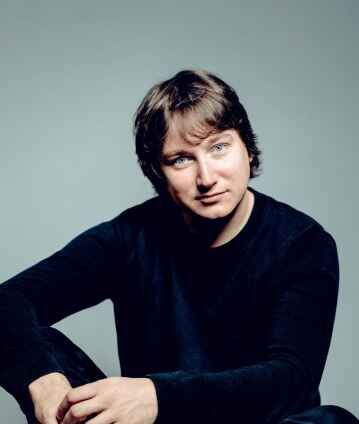
Yun Zeng, who has been principal horn with the Berliner Philharmoniker since 2024, makes his debut as a soloist in Wolfgang Amadeus Mozart’s Fourth Horn Concerto, a work that is as melodious as it is virtuosic. For Joseph Haydn’s elegant Piano Concerto No. 11, Maxim Emelyanychev conducts from the fortepiano, before returning to the conductor’s desk for the composer’s dramatic Symphony No. 104. The concert opens with Mendelssohn’s Calm sea and prosperous voyage.
“I want to make the audience happy,” says Maxim Emelyanychev, “it’s less about performance practice and more about the message – the joy – that Mozart’s music still conveys today.” Following his debut in 2022, the conductor and pianist – who was nicknamed “Mozart” as a child and is now regarded internationally as a specialist in the First Viennese School – returns as a guest conductor with the Berliner Philharmoniker. Together with orchestra member Yun Zeng, he presents Horn Concerto No. 4, which, according to recent research, is likely to be the second, chronologically speaking, of Mozart’s four horn concertos. Composed between 1783 and 1791, all of the concertos are dedicated to the horn player Joseph Leitgeb. What linked this family friend to the composer, who was 23 years his junior, was a distinct sense of humour. The Horn Concerto K. 495 exudes cheerfulness and wit, while also conveying depth and elegance. Mozart wrote the score in blue, red, green and black ink, marking very subtle dynamic nuances – as well as adding a touch of fun.
At around the same time, Joseph Haydn composed his Eleventh Piano Concerto, possibly in response to Mozart’s work in Vienna. It is the best-known of Haydn’s piano concertos and one of the few to have been published during his lifetime. Unlike many other composers, Haydn was no piano virtuoso – the focus of his work lay very clearly in symphonic music. However, Piano Concerto No. 11 places unusually demanding virtuosic demands on the soloist and surprises with an almost Romantic soundscape in the adagio. The first movement is characterised by a lively, captivating main theme; the slow movement, which unfolds in a cantabile manner, is followed by a “Rondo all’Ungarese”, whose style was particularly fashionable at the time.
Symphony No. 104, which follows, can be considered the crowning achievement of Haydn’s symphonic output. It is not only his last London symphony, but also his last symphony altogether. The composer, then in retirement, created one of his most magnificent works while in England – a work characterised by an outstanding balance of stylistic elements and perfect formal proportion. At the same time, it brings together all of Haydn’s individual achievements in a final synthesis. Following the tremendous success of the premiere in May 1795, Haydn reported: “The whole audience was exceedingly pleased, and so was I.”
“Silence deep rules o’er the waters, / Calmly slumb’ring lies the main” – these are the opening lines of one of the two poems by Goethe that Felix Mendelssohn set to music as a concert overture. This evocative “musical painting” – as his contemporaries called Calm Sea and Prosperous Voyage – sets a contrast at the start of the programme, while at the same time indicating the stylistic destination to which the ship of the First Viennese School was to sail in the 19th century.
© 2026 Berlin Phil Media GmbH